
The Research Behind Tapping (EFT)
If you are new to tapping, a little skepticism is healthy. Tapping looks strange. The good news is that you do not have to believe in it for it to work, and you do not have to take my word for it either. This page collects the published research so you can look at the evidence yourself.
Many of the studies below tested Clinical EFT, a standardized tapping protocol that traces back to the original EFT work. I teach a refined version of that work, shaped by years of one-on-one sessions, and in my experience it works faster and more reliably, though that has not been tested head-to-head. Treat this research as evidence that tapping has been studied, not as a measure of what Golden Mind Method can do. What it can do for you personally is something you can only find out by trying it.
I teach tapping to almost all of my beginners. It is simple, it is fast, and you can use it on your own after learning it once. It is also the most studied technique I teach. That matters most at the beginning, when you are deciding whether this is worth your time. Once you have felt a release for yourself, the studies fade into the background. Your own experience takes over.
A note on scope: this page covers tapping (EFT) because it is the entry point I teach most beginners. The Golden Mind Method includes other approaches to releasing, including releasing without any technique at all. Research summaries below are simplified for readability. Full citations are included with each study.
Short on time? The study summaries are below. When you want to feel what they describe, join the list and get my free guided release.
The studies below are collapsed so this page stays easy to scan. Click any title marked with a + to expand it and read the details.
The results below are promising, but studies vary in size, quality, and design. Tapping is not a replacement for professional medical or mental health care.
What this research shows, and its limits
What the research supports
Tapping as a promising approach for stress, anxiety, PTSD symptoms, and related issues.
Positive effects observed across many independent studies and research groups.
Dismantling studies suggesting the tapping itself contributes beyond placebo.
What it doesn’t show
That tapping works for every problem, or works the same for everyone.
That any particular result is guaranteed for you.
That it replaces professional care for serious conditions.
If you are dealing with severe symptoms, a mental-health crisis, or a medical condition, please work with a qualified licensed professional. This page is educational.
Stress and the Stress Hormone Cortisol
Cortisol change after one 60-minute session
Stapleton et al., 2020 · n=53, a direct replication of the 2012 trial.
In a 2020 replication study, the tapping group’s cortisol dropped 43%.
Cortisol fell 24%, with drops in anxiety, depression, and symptom severity
In a randomized controlled trial, 83 participants received a single hour-long session of EFT, talk therapy, or no treatment. The EFT group’s cortisol dropped 24.39%, compared with about 14% in both other groups. The EFT group also showed significant improvements in anxiety (-58%), depression (-49%), overall symptom severity (-51%), and symptom breadth (-42%).
The Effect of Emotional Freedom Techniques on Stress Biochemistry: A Randomized Controlled Trial.
Church, D., Yount, G., & Brooks, A. J. (2012). The Journal of Nervous and Mental Disease, 200(10), 891-896. DOI · PubMed
Design: randomized controlled trial (EFT vs. supportive interview vs. no treatment). Participants: 83 nonclinical adults.
Limitation: small sample, single-session design, and nonclinical participants; the authors note the pre/post spot-cortisol method needs further validation.
2020 replication: cortisol fell 43%
In a direct replication of the 2012 trial, 53 participants were assigned to EFT, psychoeducation, or no treatment. The EFT group’s cortisol dropped 43.24%, versus 19.67% for psychoeducation and a slight increase with no treatment.
Reexamining the Effect of Emotional Freedom Techniques on Stress Biochemistry: A Randomized Controlled Trial.
Stapleton, P., Crighton, G., Sabot, D., & O’Neill, H. M. (2020). Psychological Trauma: Theory, Research, Practice, and Policy, 12(8), 869-877. DOI · PubMed
Design: direct-replication randomized controlled trial. Participants: 53 adults (EFT vs. psychoeducation vs. no treatment).
Limitation: modest sample; only immediate pre/post effects measured; the EFT-vs-no-treatment cortisol difference was not statistically significant; the 2012 self-reported distress improvements were not reproduced.
270,000 app users: anxiety and stress fell after a single session
Researchers analyzed outcomes from 270,461 users of a tapping app who completed a guided session. After one session, anxiety scores fell 29% and stress scores 31%.
App-Based Delivery of Clinical Emotional Freedom Techniques: Cross-Sectional Study of App User Self-Ratings.
Church, D., Stapleton, P., & Sabot, D. (2020). JMIR mHealth and uHealth, 8(10), e18545. DOI · PubMed · Full text
Design: cross-sectional pre/post analysis of app-user self-ratings (no randomized control). Participants: 270,461 app users; 380,034 sessions.
Limitation: ratings were self-reported; brief app sessions show immediate changes only; the authors note questions remain about repeat use.
Want to explore this for yourself? Join the list and get my free guided release.
Anxiety
14 randomized trials. One conclusion.
14
randomized controlled trials in a 2016 meta-analysis.
Tapping significantly reduced anxiety compared with control conditions.
Clond, 2016 · 14 trials, 658 participants.
A 2016 meta-analysis of 14 randomized trials found EFT significantly reduced anxiety.
Meta-analysis: 14 randomized trials on anxiety
A 2016 systematic review with meta-analysis of 14 randomized controlled trials found that EFT significantly reduced anxiety scores compared with control conditions.
Emotional Freedom Techniques for Anxiety: A Systematic Review With Meta-analysis.
Clond, M. (2016). The Journal of Nervous and Mental Disease, 204(5), 388-395. DOI · PubMed
Design: systematic review with meta-analysis. Participants: 14 randomized controlled trials, 658 participants total.
Limitation: the author notes substantial heterogeneity (including noncomparable populations), heterogeneous controls, too few standard-of-care comparisons, and many very small studies.
Test anxiety: tapping beat muscle relaxation
Researchers examined 312 high school students and identified 70 with high test anxiety. The students were randomly assigned to progressive muscle relaxation or EFT. Both groups improved, but the EFT group improved significantly more.
The Effect of Progressive Muscular Relaxation and Emotional Freedom Techniques on Test Anxiety in High School Students: A Randomized Controlled Trial.
Sezgin, N., & Özcan, B. (2009). Energy Psychology: Theory, Research, and Treatment, 1(1), 23-30. DOI (no PubMed record; journal not indexed)
Design: randomized active-control trial (EFT vs. progressive muscle relaxation), one instructed session plus two months of home practice. Participants: 312 students screened; 70 randomized; 32 completed and were analyzed.
Limitation: severe attrition (70 randomized down to 32 analyzed); completer-only analysis; home-practice adherence unverified; single academy limits generalizability.
One tapping session changed the brain’s response to threatening voices
Using EEG, researchers compared one session of tapping with progressive muscle relaxation. Tapping altered the brain’s neural response when participants heard angry voices, a marker of threat processing. The authors concluded that a single session can shift how the brain handles social threat.
How Therapeutic Tapping Can Alter Neural Correlates of Emotional Prosody Processing in Anxiety.
König, N., Steber, S., Seebacher, J., von Prittwitz, Q., Bliem, H. R., & Rossi, S. (2019). Brain Sciences, 9(8), 206. DOI · PubMed · Full text
Design: pseudo-randomized active-control EEG study (pre/post). Participants: 22 anxiety patients (tapping n=9, muscle relaxation n=13); one 60-minute session.
Limitation: the authors note a small sample, no no-intervention group, only immediate effects measured, and follow-up needed.
PTSD and Trauma
Veterans meeting PTSD criteria, after six sessions
Church et al., 2013 · 59 veterans. Most of the tapping group were still below the threshold at the 3- and 6-month follow-ups.
90% of veterans no longer met the clinical criteria for PTSD after six sessions.
Veterans: 90% below the PTSD threshold
Veterans meeting clinical criteria for PTSD were randomly assigned to six weekly one-hour EFT sessions or standard care. After six weeks, 90% of the EFT group no longer met the criteria, versus 4% of the standard care group. Most were still below the threshold at the 3- and 6-month follow-ups.
Psychological Trauma Symptom Improvement in Veterans Using Emotional Freedom Techniques: A Randomized Controlled Trial.
Church, D., Hawk, C., Brooks, A. J., Toukolehto, O., Wren, M., Dinter, I., & Stein, P. (2013). The Journal of Nervous and Mental Disease, 201(2), 153-160. DOI · PubMed
Design: randomized wait-list-controlled trial with crossover and longitudinal follow-up. Participants: 59 veterans (EFT n=30, wait-list n=29); six one-hour sessions.
Limitation: wait-list rather than active-therapy control; PTSD status by self-report cutoff rather than clinician diagnosis; EFT delivered alongside standard care.
2023 meta-analysis: effects comparable to established therapies
A 2023 systematic review and meta-analysis found large treatment effects for EFT on PTSD compared with waitlist, usual care, or no treatment. Against active controls, the results were broadly comparable to other evidence-based therapies.
Emotional Freedom Techniques for Treating Post Traumatic Stress Disorder: An Updated Systematic Review and Meta-analysis.
Stapleton, P., Kip, K., Church, D., Toussaint, L., Footman, J., Ballantyne, P., & O’Keefe, T. (2023). Frontiers in Psychology, 14, 1195286. DOI · PubMed · Full text
Design: systematic review and meta-analysis. Participants: 6 randomized controlled trials.
Limitation: the authors note small study numbers and samples may overestimate effects; too few studies to test publication bias; all self-report PTSD measures; treatment fidelity not always reported.
Depression
Depression scores, averaged across 20 studies
Nelms & Castel, 2016 · 20 studies. The authors rated the effect size “very large.”
Across 20 studies, depression scores fell 41% on average.
Meta-analysis of 20 studies: 41% average reduction
A meta-analysis of 20 studies (including randomized clinical trials) found EFT for depression had a very large effect size. On average, depression scores fell 41%, and 90% of the treatment group scored above the average of the control group.
A Systematic Review and Meta-Analysis of Randomized and Nonrandomized Trials of Clinical Emotional Freedom Techniques (EFT) for the Treatment of Depression.
Nelms, J. A., & Castel, L. (2016). Explore: The Journal of Science & Healing, 12(6), 416-426. DOI · PubMed
Design: systematic review and meta-analysis (12 RCTs + 8 outcome studies). Participants: 398 EFT-treated participants in RCTs, 461 in outcome studies.
Limitation: the authors note improvements in uncontrolled studies may be nonspecific treatment effects, and nonsignificant studies may be underreported (publication bias).
The Brain and Nervous System
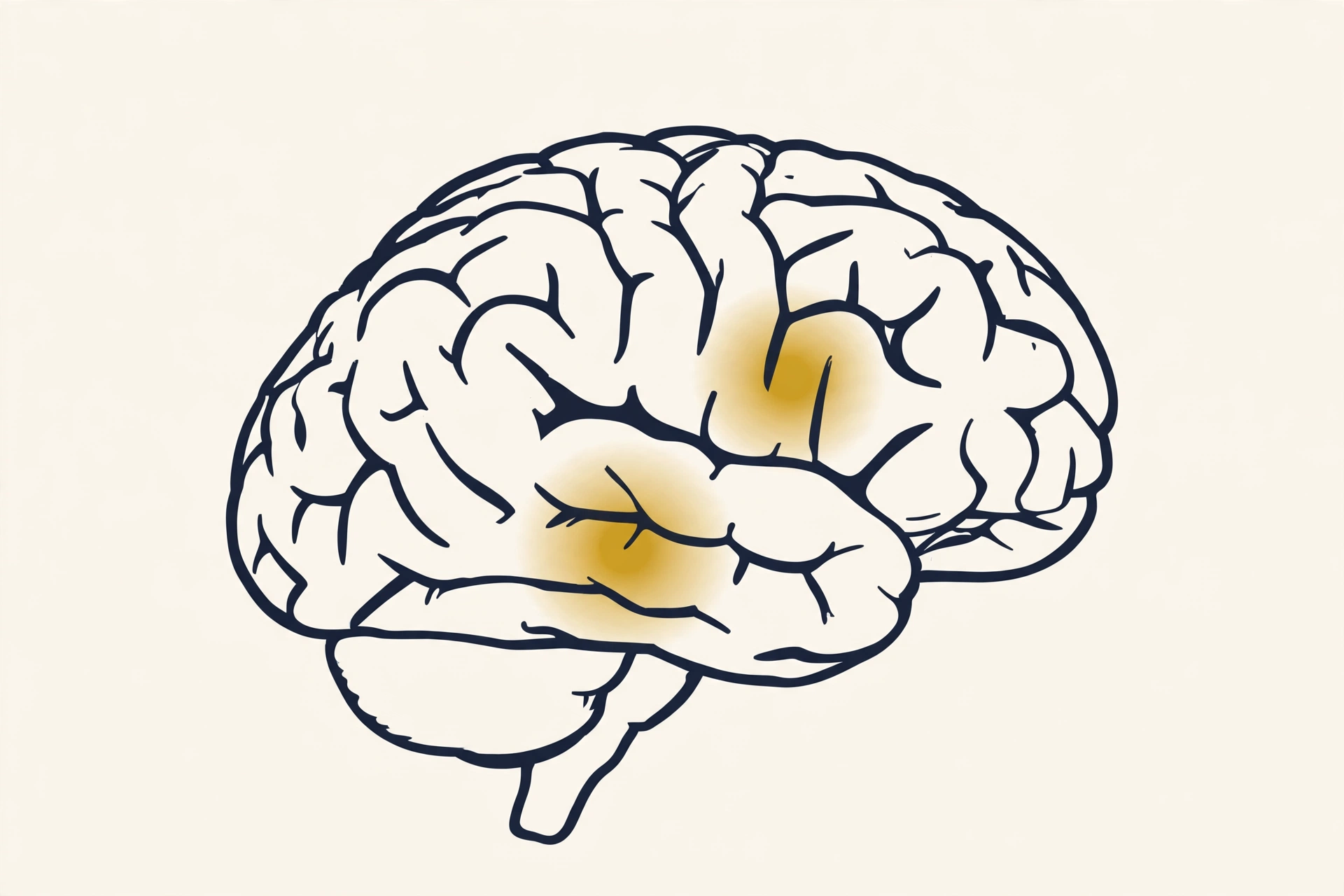
Reduced response in craving-related brain regions
In a small pilot study, two regions involved in food cravings showed less activation after four weeks of EFT.
Stapleton et al., 2019 · fMRI pilot, n=15.
Several brain-imaging studies have found changes in brain activity or connectivity alongside Clinical EFT or related acupoint-tapping approaches, in regions involved in reward, emotional processing, memory, and pain.
Explore the brain-imaging studies
These are small studies using different protocols. The two Wittfoth studies used bifocal acupoint tapping rather than standard Clinical EFT. The imaging findings do not establish one biological mechanism.
Food cravings: In 15 adults, four weeks of Clinical EFT was accompanied by reduced cravings and lower fMRI responses to high-calorie food images in the superior temporal gyrus and lateral orbitofrontal cortex, compared with controls.
An Initial Investigation of Neural Changes in Overweight Adults with Food Cravings after Emotional Freedom Techniques.
Stapleton, P., Buchan, C., Mitchell, I., McGrath, Y., Gorton, P., & Carter, B. (2019). OBM Integrative and Complementary Medicine, 4(1), 010. DOI
Design: pilot randomized trial, pre/post fMRI; Clinical EFT, n=10, control n=5. Limitation: very small sample.
Fear and disgust: In 17 healthy participants, fMRI during visualized acupoint tapping found increased amygdala activity and decreased ventral anterior cingulate activity. Responses in prefrontal and visual areas differed by stimulus; disgust ratings fell, while fear ratings did not significantly change.
Emotion regulation through bifocal processing of fear inducing and disgust inducing stimuli.
Wittfoth, D., Pfeiffer, A., Bohne, M., Lanfermann, H., & Wittfoth, M. (2020). BMC Neuroscience, 21, 47. DOI · PubMed
Design: fMRI during visualized tapping after instruction in actual tapping; related bifocal protocol, not Clinical EFT.
Fear of flying: In 29 participants, a bifocal intervention combining acupoint tapping and cognitive restructuring was followed by lower flight-fear scores. During tapping, fMRI showed increased amygdala activity and decreased activity in the hippocampus and temporal pole.
Bifocal emotion regulation through acupoint tapping in fear of flying.
Wittfoth, D., Beise, J., Manuel, J., Bohne, M., & Wittfoth, M. (2022). NeuroImage: Clinical, 34, 102996. DOI · PubMed
Design: within-subject fMRI; related bifocal intervention, not Clinical EFT.
Chronic pain: After six weeks of group Clinical EFT, 24 adults reported improvements in pain and related measures. Resting-state fMRI showed reduced connectivity between the medial prefrontal cortex and areas of the posterior cingulate cortex and thalamus.
Neural changes after Emotional Freedom Techniques treatment for chronic pain sufferers.
Stapleton, P. B., Baumann, O., O’Keefe, T., & Bhuta, S. (2022). Complementary Therapies in Clinical Practice, 49, 101653. DOI · PubMed
Design: pre/post resting-state fMRI, Clinical EFT; no separate control group reported.
Pain, Cravings, and Physical Health
After a four-day tapping workshop
Bach et al., 2019. 203 participants.
After a four-day workshop: pain down 57%, cravings down 74%.
Four-day workshop improved body and mind
203 participants attended a four-day EFT workshop. Afterward: anxiety down 40%, depression down 35%, PTSD down 32%, pain down 57%, and cravings down 74%. Happiness rose 31%. In a subgroup with full physiological testing, cortisol fell 37%, resting heart rate fell 8%, blood pressure dropped, and an immune marker (salivary immunoglobulin A) rose 113%.
Clinical EFT (Emotional Freedom Techniques) Improves Multiple Physiological Markers of Health.
Bach, D., Groesbeck, G., Stapleton, P., Sims, R., Blickheuser, K., & Church, D. (2019). Journal of Evidence-Based Integrative Medicine, 24, 2515690X18823691. DOI · PubMed · Full text
Design: uncontrolled pre/post workshop study. Participants: 203 workshop attendees (physiological subgroup n=31; 89 completed follow-up).
Limitation: the authors note no control group, self-report outcomes, only 44% completed follow-up, and possible nonspecific or group effects.
Healthcare workers: two hours, gains held at 90 days
216 healthcare workers at five professional conferences used EFT as a self-intervention for two hours. Psychological distress, pain, emotional distress, and cravings all improved significantly. A 90-day follow-up completed by 53% of the sample showed most gains were maintained.
The Effect of a Brief EFT (Emotional Freedom Techniques) Self-Intervention on Anxiety, Depression, Pain and Cravings in Healthcare Workers.
Church, D., & Brooks, A. J. (2010). Integrative Medicine: A Clinician’s Journal, 9(5), 40-44. (no DOI or PubMed record)
Design: uncontrolled within-subject pre/post study with 90-day follow-up. Participants: 216 healthcare workers; 53% completed follow-up.
Limitation: no control group; convenience sample of conference attendees; self-report measures; only 53% completed follow-up.
How Tapping Works
What is actually doing the work?
Dismantling studies test each component separately. The verdict: the tapping itself is an active ingredient, not placebo. (Feinstein, 2025)
Dismantling studies show the tapping itself is an active ingredient, not placebo.
2025 review: 200+ trials, 11 meta-analyses, 11 systematic reviews
A 2025 narrative review synthesized more than 200 clinical trials, meta-analyses, systematic reviews, biomarker studies, and dismantling studies on tapping. It reports that dismantling research supports acupoint stimulation as an active component, and that tapping appears to work through memory reconsolidation and electrochemical signals that modulate limbic and executive brain regions.
How Tapping Works: Physiological and Psychological Mechanisms in Energy Psychology Treatments.
Feinstein, D. (2025). Frontiers in Psychology, 16, 1660375. DOI · PubMed · Full text
Design: narrative/mechanistic review (no participants). Scope: 200+ clinical trials, meta-analyses, biomarker investigations, and dismantling studies.
Limitation: the author notes more research is needed on technique variables such as wording, pacing, acupoint selection, and stimulation intensity. Disclosure: the author writes books and provides trainings on the topic.
Take the Next Step
Research can help you decide whether tapping is worth exploring. I’ve created a free guided release so you can try the process with one manageable feeling. Join the list and I’ll send it right away.